This post contains affiliate links. If you grab one of the printables I recommend, I may earn a small commission at no extra cost to you.
My book club has a bad habit of not reading the book. We meet, we eat, we talk about everything except the chapters, and someone always says they got busy. So one November we made a deal, we would skip the novel and all keep a gratitude journal for the month instead, then compare notes at the next meeting like it was assigned homework.
Nobody wanted to buy a fancy bound journal for a one-month experiment. So I printed prompt pages at the kitchen table on my slow inkjet, the one that pauses dramatically before every page, and brought a stack to pass around. Six of us, six little printed journals, all from the same files.
A few of the printables below are the exact ones we used, and yes, some links are affiliate links, so if you grab one I might earn a small cut at no cost to you. Let me walk you through what worked and where my own copy fell apart.
The Five-Minute Format That Got The Skeptics In
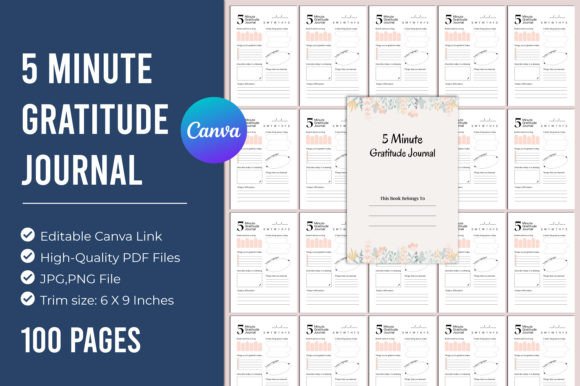
Half my book club swore they had no time for journaling, so I led with this one on purpose. It is built around a quick daily layout, a few lines, a prompt or two, the kind of thing you can finish while the kettle heats. Low commitment is the only reason some of them started at all.
It opens in a design tool you can edit, so I changed the header font to something softer before I printed, then ran it on plain paper because this was the throwaway test month. It held up fine for a five-minute habit.
My one nitpick is that the daily boxes are a little shallow. If you are the type who writes three sentences instead of one, your handwriting runs out of room and crawls up the margin. I just kept mine short, which was probably the point.
Ninety Days Of Prompts For The Overachiever Friend
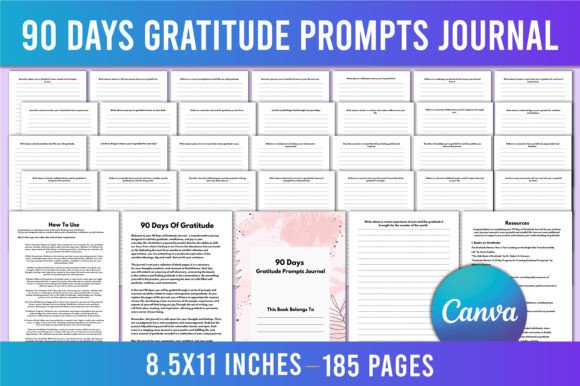
One member of the club does not do anything halfway, so when she heard ninety days she lit up. This set carries you well past our single month with a fresh prompt for each day, which meant she never sat staring at a blank line wondering what to be grateful for.
It is editable, so she swapped a couple of prompts she found too cheesy for ones that fit her better. I love that you can do that, take the bones and make it yours before a single page prints.
The nitpick is volume. Ninety pages is a lot to run on a home printer, and she went through an ink cartridge faster than she expected. I told her to print in batches of fifteen, but she printed the whole thing the first night and regretted it by page forty.
A Prompt Bank Big Enough To Never Repeat
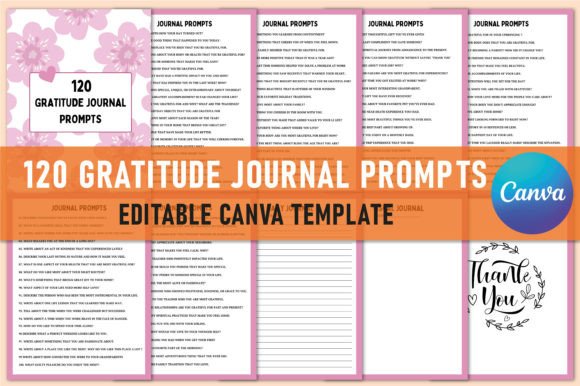
This one is less a journal and more a deep well of prompts, a hundred and twenty of them, which is more than even our most dedicated member used. The value is that you never hit the same question twice and start phoning it in. Variety kept the entries from going stale.
It is editable in the same design tool, so I pulled out maybe thirty of my favorite prompts and printed only those rather than the whole stack. Treat it as a menu, not a mandate.
My nitpick is that with this many prompts the design leans plain to keep things readable, so the pages are not much to look at. I added a little leaf doodle in the corner before printing just so my journal did not feel like a worksheet.
The Positivity Log That Doubled As A Mood Tracker
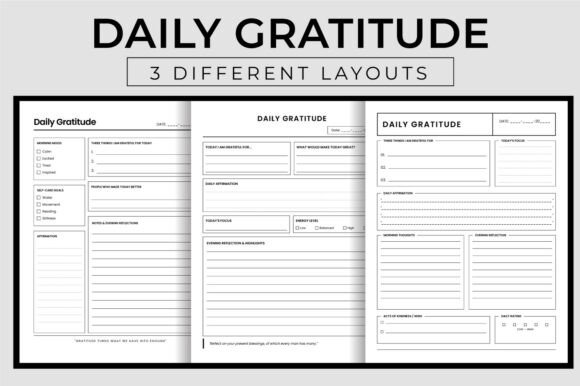
This layout does more than gratitude, it folds in a little positivity log so you can note how the day actually went alongside what you were thankful for. A couple of us found that the most useful part, seeing the grateful line and the rough day sitting side by side on the same page.
I printed this one on slightly heavier paper because I knew it would get handled more, flipped back through, marked up. It took pen well without ghosting through to the back.
The nitpick is that the log section uses small checkboxes and rating marks that are easy to ignore if you are in a hurry. I skipped them half the time and just wrote, which made my copy a bit lopsided compared to the friend who filled in every box.
The Dated 2026 Journal For Starting In January
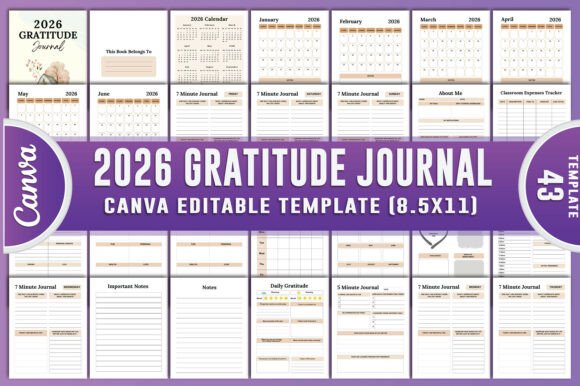
Our experiment was a November thing, but one member liked it enough to keep going into the new year, and this dated 2026 version was made for exactly that. The year is built in, so it feels less like a craft project and more like a real planner she committed to.
It is set up to edit and print, or to run as a book through a print service if you want a bound copy, which is where the KDP part comes in. She did the home-print route for the first month, then talked about ordering a proper bound one.
My nitpick is that the dated structure means it really wants you to start at the top of the year, so jumping in mid-month leaves a stack of blank dated pages staring at you. Fine if you are a January person, mildly guilt-inducing if you are not.
A Full Year Of Prompts For The Long Haul
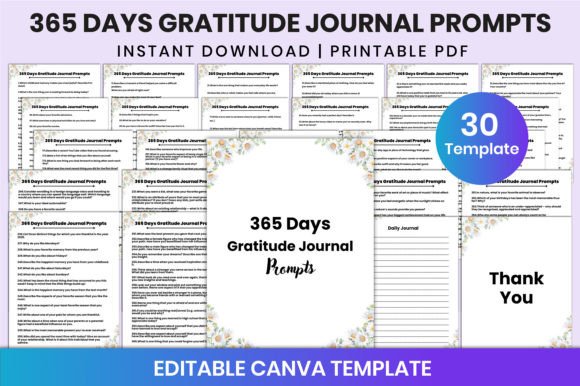
This is the marathon option, a prompt for every single day of the year, and exactly one member of my club was ambitious enough to want it. The appeal is obvious, you set it up once and never run dry, not for twelve whole months.
It is editable, so she trimmed a few seasonal prompts that did not fit and printed the year in seasonal chunks rather than all at once, which I think is the only sane way to handle three hundred and sixty-five pages.
The nitpick, predictably, is the sheer page count. This is not a print-tonight job unless you only print a week at a time. She kept hers in a folder and added pages monthly, which honestly worked better than my approach did.
The Ninety-Day Set You Can Turn Into A Real Book
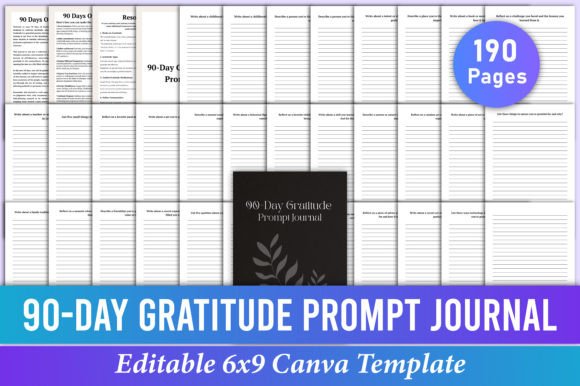
This is the print-service-ready cousin of the ninety-day prompts, formatted so you can have it bound into an actual paperback rather than wrangling loose pages. For a friend who hated the idea of a flimsy stack, this was the answer.
The interior is clean and prompt-driven, one question per day for three months, sized for a standard book trim. She ordered a single copy for herself and it showed up looking like something off a store shelf.
My nitpick is that because it is built for binding, the inner margins are wider to allow for the spine, which looks slightly off if you ignore the binding and just print it at home on loose sheets. Print it the way it was meant to be printed and it is great.
The Daily Pages That Felt Like A Gentle Nudge
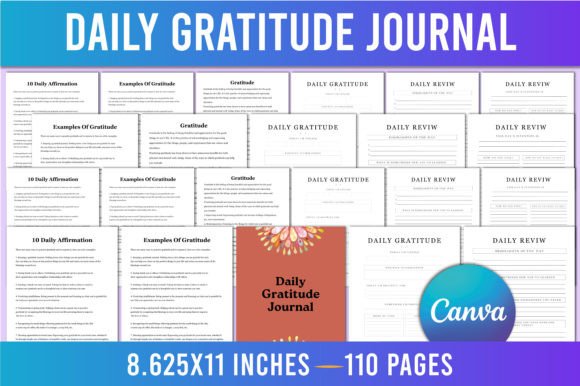
This was the format I ended up liking best for everyday use, a daily page with a prompt already sitting at the top so you are never starting from nothing. On the foggy mornings when I had no idea what to write, the prompt did the heavy lifting.
I printed a couple of weeks at a time on plain paper and that rhythm suited me, small batches I could actually keep up with. The prompts skew warm and simple, nothing that made me roll my eyes.
The nitpick is that the same prompt structure repeats, so over a long stretch the format starts to feel familiar. For a one-month run it was perfect. For a full year I would want more variety, which is what the bigger sets are for.
A Loose-Leaf Ninety-Day Run For The Binder Crowd
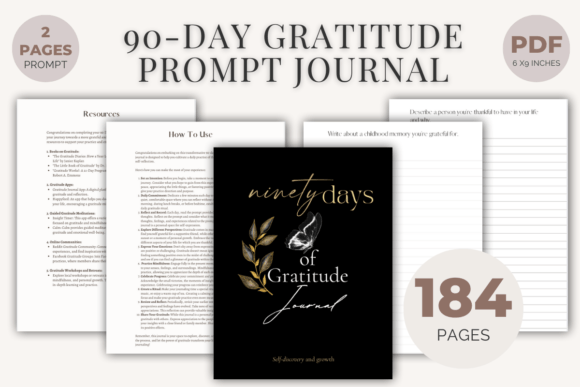
This is the plain ninety-day prompt journal, no book formatting, just clean pages you print and use however you like. After my own stapling disaster I started recommending this exact one to anyone who asked, because loose pages belong in a binder anyway.
The layout is simple and the prompts carry you a full three months, which is well past our experiment but a nice on-ramp if the habit sticks. I printed mine, hole-punched the stack, and finally had something that did not shed pages.
Nitpick, since it is loose and unbound, there is no cover page that feels finished, so the first sheet is just day one. I printed a little title page of my own to slip in front, which took five minutes and made it feel like a real journal.
The Thirty-Day Set That Matched Our Experiment Exactly
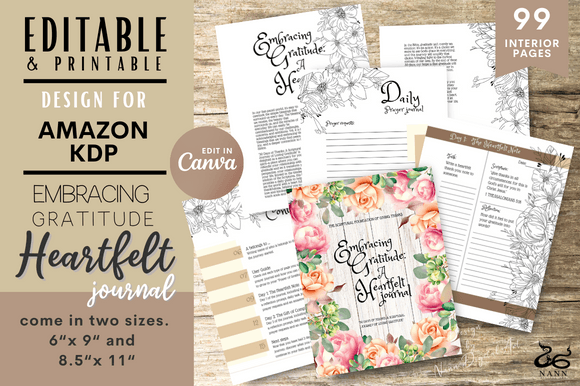
If I had found this one first I would have handed it straight to the whole club, because thirty days is precisely how long our deal lasted. One page a day for a month, no more, no less, with a clean prompt-led layout that does not overstay its welcome.
I printed a few of these to compare and the brevity is the selling point. There is no guilt about abandoned pages because the whole thing is designed to end right when your month does. It felt finishable, which matters more than people admit.
My nitpick is that thirty days goes fast, and a couple of us wanted to keep going and had to jump to a longer set. A built-in nudge toward continuing would have been nice, but that is a small thing for a journal that did its one job well.
Frequently Asked Questions
How does gratitude journaling help with stress?
For me it was less about a dramatic mood fix and more about where my attention landed. On a stressful day, sitting down to name three good things pulled my head out of the spiral for a few minutes, and a few minutes was often enough.
My book club said much the same, that it did not erase a hard week but it gave the week some balance, a place to put the good next to the bad.
How to use a gratitude journal?
Keep it stupidly simple or you will quit, that is my whole philosophy. Pick a time you already pause, mine was after the dinner dishes, and write a line or two, or answer the day’s prompt if the page gives you one. The prompt sets earn their keep on the mornings your brain is empty.
We found doing it as a group helped too. Knowing someone would ask about my entries kept me honest in a way going solo never did.
Can I print these at home?
Yes, that is exactly how my club did it, six of us off the same files on regular home printers. Plain paper is fine for a trial month, though if you want pages that survive being flipped through, run them on something heavier.
The sets built for a print service can also be done at home, just know the binding margins were drawn for a spine, so they look a touch off on loose sheets.
What file formats do these designs come in?
Several of these open in an editable design tool so you can tweak prompts and fonts before you print, which I did constantly. Others are set up as print-ready files meant to be sent to a book service and bound.
The listing usually tells you which is which, so check before buying if you want something to edit and print yourself or something to order as a finished book.
Before You Print
We compared journals at the next meeting and it turned into the best discussion we had had in months, partly because for once everyone had actually done the homework. Two members are still journaling. The rest of us went back to not reading novels together, which feels like its own small tradition.
The thing I would change is obvious from my own copy. I stapled my printed pages into a little booklet and by week two the staples had torn through and pages were drifting loose all over my bag. I gave up and moved the whole thing into a cheap ring binder, hole-punched and tidy, and it survived the rest of the month without losing a single page. Print loose, punch holes, skip the stapler.